
Dodo zu Innhausen und Knyphausen
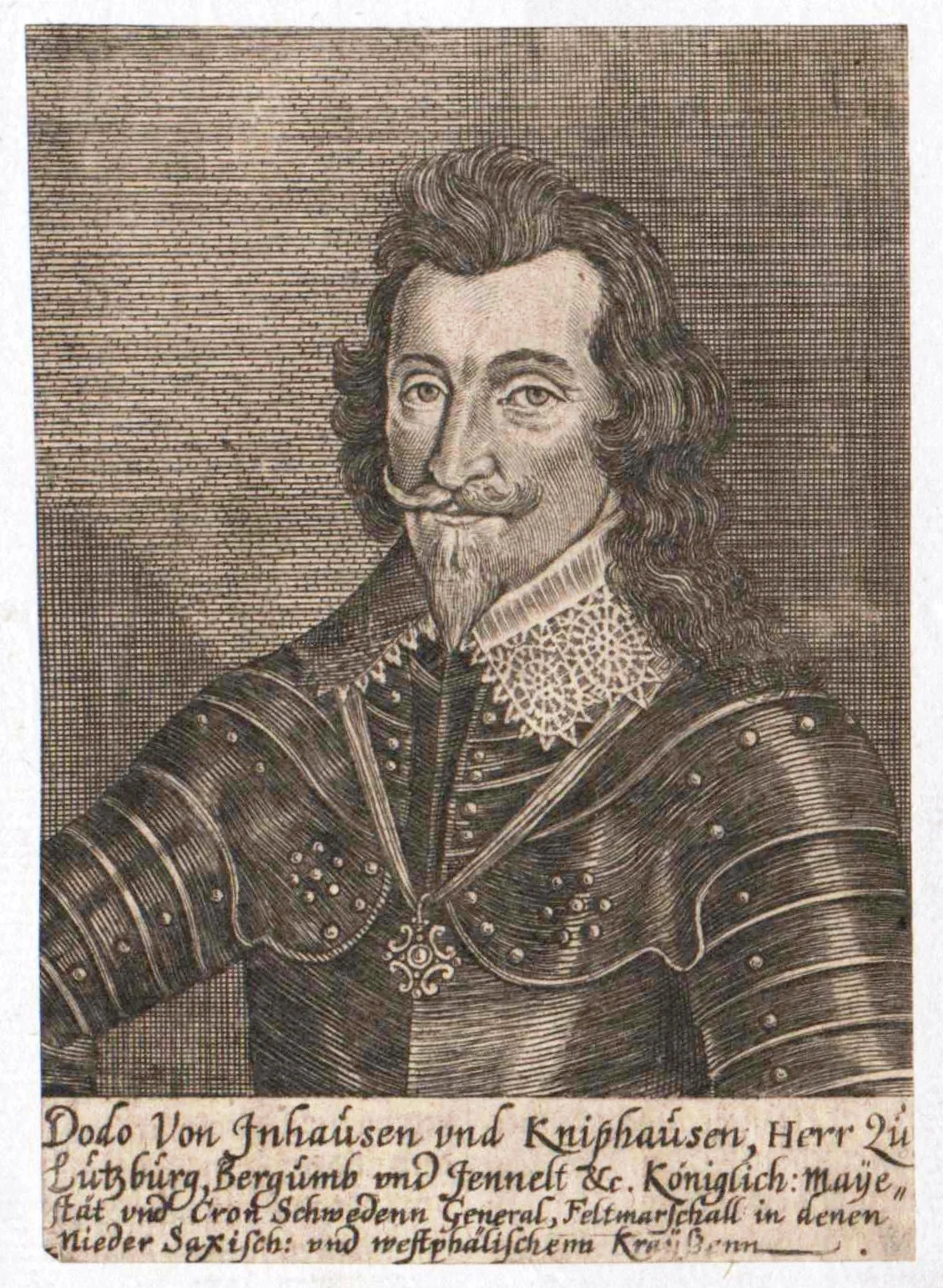
Image from Wikipedia
Image from Wikipedia
Dodo zu Innhausen und Knyphausen: An East Frisian Commander Between Strategy, Loyalty, and War Turmoil
A Life in the Sign of the Thirty Years' War
Dodo Baron von Innhausen und zu Knyphausen, born on July 22, 1583, in Lütetsburg and died on January 11, 1636, near Haselünne, is one of the notable military figures of the Protestant party in the Thirty Years' War. He came from an East Frisian noble family that had been closely associated with the lordship of Lütetsburg since the late 16th century. His biography connects origin, social consciousness, and military career into an impressive portrait of early modern war history. ([de.wikipedia.org](https://de.wikipedia.org/wiki/Dodo_zu_Innhausen_und_Knyphausen))
Those who engage with Dodo zu Innhausen und Knyphausen encounter not a musician, but a commander whose life path was shaped by the major conflict lines of his time. Nonetheless, his career resembles a dramatic score of ascent, probation, captivity, return, and ultimate downfall. It is precisely in the combination of personal ambition, religious attitude, and organizational talent that the historical fascination of this man lies. ([de.wikipedia.org](https://de.wikipedia.org/wiki/Dodo_zu_Innhausen_und_Knyphausen))
Origin, Family, and Early Influences
Dodo was born into a family whose property and spheres of influence were deeply rooted in East Frisia. His father was Wilhelm zu Inn- und Knyphausen, and his mother was Hyma Manninga, the heiress of the Lütetsburg estate. The environment of noble claims, land ownership, and regional power shaped his youth as much as the proximity to the political and confessional tensions of the early 17th century. ([de.wikipedia.org](https://de.wikipedia.org/wiki/Dodo_zu_Innhausen_und_Knyphausen))
The German Biography classifies the Knyphausen family as an East Frisian chieftain and noble family, whose ancestral seat was Lütetsburg and which produced numerous prominent figures. For Dodo, this heritage meant not only social rank but also obligation and pressure of expectation. This explains why his later actions were always accompanied by a sense of duty, military discipline, and strategic sobriety. ([deutsche-biographie.de](https://www.deutsche-biographie.de/gnd11884458X.html))
The Path to a Military Career
In 1602, at the age of 19, Dodo entered Dutch military service and rose to the position of General of Artillery under Maurice of Nassau. This early station marks the actual beginning of his military career and already showcases the combination of technical understanding and leadership that would later characterize him. After suffering an injury, he initially returned to his homeland, took office as the magistrate of Stickhausen in 1607, and combined administrative experience with military practice. ([de.wikipedia.org](https://de.wikipedia.org/wiki/Dodo_zu_Innhausen_und_Knyphausen))
His marriage to Anna von Schade in 1610 added an economically and socially significant connection to his career. The East Frisian and Westphalian contexts of his family played an important role, as they not only anchored him in regional networks but also expanded his scope for action. This created the profile of a nobleman who combined military skill with dynastic interests. ([de.wikipedia.org](https://de.wikipedia.org/wiki/Dodo_zu_Innhausen_und_Knyphausen))
Martial Rise in the Shadows of European Conflicts
In the Thirty Years' War, Dodo emerged as a commander of the Protestant side. Wikipedia explicitly describes him as a significant general of the Protestant conflict party. His career led him into central military confrontations, including the battles in Westphalia associated with Swedish warfare. ([de.wikipedia.org](https://de.wikipedia.org/wiki/Dodo_zu_Innhausen_und_Knyphausen))
Sources particularly emphasize his organizational abilities. Historical evidence shows that Dodo's military talent lay not only in immediate warfare tactics but also in planning, supply, and logistics. These qualities made him a functional, highly effective commander in a war characterized by mobility, resource scarcity, and changing alliances. ([de.wikipedia.org](https://de.wikipedia.org/wiki/Dodo_zu_Innhausen_und_Knyphausen))
Captivity, Return, and Renewed Responsibility
In 1631, Dodo fell into imperial captivity but did not permanently escape the events of war. In the following years, he remained embedded within the military structures of the Protestant side and eventually entered Swedish service. This phase demonstrates his remarkable adaptability within a war where loyalty, alliance fidelity, and tactical pragmatism were often closely intertwined. ([de.wikipedia.org](https://de.wikipedia.org/wiki/Dodo_zu_Innhausen_und_Knyphausen))
In 1633, he became a field marshal. During this time, he, along with Duke George of Brunswick and Lüneburg, won the Battle of Hessisch-Oldendorf. Such events are central to his historical profile because they do not reduce his role to that of a regional actor, but instead represent him as a militarily recognized commander in a European major conflict. ([bibliothek.ostfriesischelandschaft.de](https://bibliothek.ostfriesischelandschaft.de/wp-content/uploads/sites/3/dateiarchiv/2297/Inn-Knyphausen-Dodo-1583.pdf))
Significance, Attitude, and Personal Profile
Dodo remained true to his Protestant faith according to the surviving letters and reports. His correspondence with his wife Anna, as well as protection letters to relatives and confidants, reveals a man who, even in war, did not abandon familial ties and religious conviction. This combination of personal loyalty and martial toughness gives his figure remarkable historical depth. ([de.wikipedia.org](https://de.wikipedia.org/wiki/Dodo_zu_Innhausen_und_Knyphausen))
Research assessments conclude that Dodo was a typical war entrepreneur and mercenary leader of the early 17th century, albeit not on the vast scale of a Mansfeld, Tilly, or Wallenstein. This comparison precisely defines his position: not a mythically elevated grand strategist, but an extraordinarily capable organizer with a clear military style. This is crucial for placing his life in context. ([de.wikipedia.org](https://de.wikipedia.org/wiki/Dodo_zu_Innhausen_und_Knyphausen))
Final Campaigns and Death near Haselünne
In November 1635, Dodo took command of the Swedish troops in Westphalia to prepare them for the upcoming summer campaign. Shortly after, he fell in a skirmish near Haselünne or Meppen in 1636. His death marked the abrupt end of a career closely tied to the military shifts of the Thirty Years' War. ([de.wikipedia.org](https://de.wikipedia.org/wiki/Dodo_zu_Innhausen_und_Knyphausen))
The transfer and burial of his body also illustrate the significance of his person in regional memory. The embalmed body was initially laid out in Meppen, later moved to Emden, and finally to Jennelt, where he was buried in the church. These locations are more than mere biographical details; they reflect the rank of a man whose death was perceived publicly and over a considerable time. ([de.wikipedia.org](https://de.wikipedia.org/wiki/Dodo_zu_Innhausen_und_Knyphausen))
Placement in Historical Memory
The present significance of Dodo lies less in a single battle than in the totality of his military career. He embodies the connection of regional noble history, confessional ties, and professional warfare. His biography thus serves as a key to understanding the dynamics of the Thirty Years' War not merely as a sequence of battles but as a system of personnel, administration, and supply. ([deutsche-biographie.de](https://www.deutsche-biographie.de/gnd11884458X.html))
For those interested in military history, East Frisian nobility, and the dramatic upheavals of the 17th century, Dodo zu Innhausen und Knyphausen offers a multifaceted historical figure. He remains intriguing because his life consolidates discipline, loyalty, religious conviction, and strategic thinking within a single biography. An encounter with this person always means an encounter with the harshness and complexity of the early modern war era. ([de.wikipedia.org](https://de.wikipedia.org/wiki/Dodo_zu_Innhausen_und_Knyphausen))
Conclusion: Why Dodo zu Innhausen und Knyphausen Continues to Fascinate Today
Dodo zu Innhausen und Knyphausen represents a time of war in which leadership, organizational talent, and social honor could determine life and death. His journey from East Frisian nobleman to Swedish field marshal shows a man who remained capable of action amid the turmoil of the Thirty Years' War and left historical traces. This blend of duty, faith, and military competence makes him compelling to this day. ([de.wikipedia.org](https://de.wikipedia.org/wiki/Dodo_zu_Innhausen_und_Knyphausen))
Anyone who wants to grasp history not just as a narrative but in all its tension should take a closer look at Dodo's life. His biography does not offer a glamorous portrait of an artist but the dramatic truth of a commander whose name remains present in sources to this day.
Official Channels of Dodo zu Innhausen und Knyphausen:
- Instagram: no official profile found
- Facebook: no official profile found
- YouTube: no official profile found
- Spotify: no official profile found
- TikTok: no official profile found