
Richard Meier (Architekt)
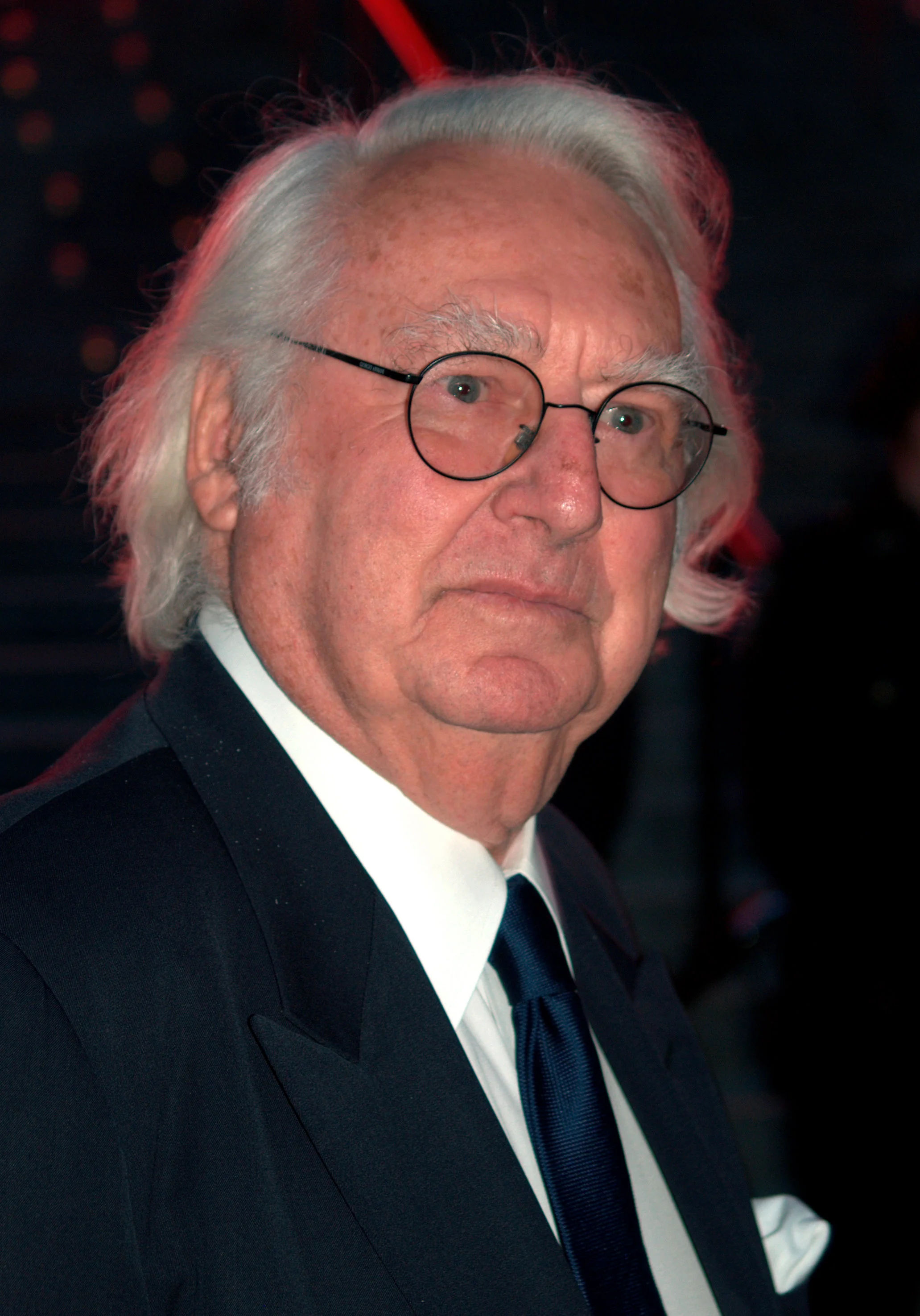
Image from Wikipedia
Image from Wikipedia
Richard Meier – The Master of Light and White Modernism
An Architect Who Shaped an Entire Era with Clarity, Geometry, and Rigorous Elegance
Richard Meier is one of the most influential architects of the second half of the 20th century. Born on October 12, 1934, in Newark, New Jersey, he developed early on a signature style characterized by clear forms, white surfaces, precise proportions, and an exceptional relationship of light and space. His work combines modernist tradition with a distinctive visual language that is recognizable around the world.
As the Pritzker Prize winner of 1984, Meier is one of the most internationally renowned masters of his generation. His career spans from private residences to museums to complex public buildings, and his influence on modern architecture remains visible to this day. To understand Richard Meier is to encounter an architecture that does not rely on effects but on order, tension, and permanence.
Early Years and Intellectual Influence
Meier studied architecture at Cornell University, graduating with a Bachelor of Architecture in 1957. After stints at Skidmore, Owings and Merrill and Marcel Breuer, he founded his own practice in 1963. These early years laid the foundation for a body of work that consistently opposed fashionable randomness and relied instead on the purity of modernist principles.
His architectural stance was fed by an intense dialogue with modernity. Influential reference points included Le Corbusier, Frank Lloyd Wright, Alvar Aalto, and Mies van der Rohe; at the same time, Meier pointed to Bramante, Borromini, and Bernini as further milestones in a long tradition. From this connection between modernity and historical depth emerged a style that feels analytical yet remains emotionally accessible.
The Breakthrough with the White Houses
The true career boost came with the residential designs of the 1960s and 1970s, most notably with the Smith House in Darien, Connecticut, which was completed in 1967. This project marked the beginning of his so-called “white buildings” and was immediately recognized as groundbreaking. Later, in 2000, the house received the 25 Year Award from the AIA, underscoring its lasting influence on American architecture.
The Douglas House in Harbor Springs, Michigan, completed in 1973, is also among the icons of his oeuvre. The architecture plays with interlocking levels, clear geometries, and a bright, almost floating sense of space. It is precisely in the tension between strict form and the surrounding landscape that Meier's ability to stage architecture as a precisely composed spatial experience becomes evident.
From Private Residence to Public Megaproject
Following the success of the residences, the step toward larger public commissions began in the mid-1970s. With the Atheneum in New Harmony, Indiana, the High Museum of Art in Atlanta, the Museum of Decorative Arts in Frankfurt am Main, the city hall and library in The Hague, and the Museum of Contemporary Art in Barcelona, Meier expanded his language to urban and institutional scales. His architecture remained instantly recognizable: geometric clarity, bright surfaces, curvilinear ramps, and the deliberate use of light as a formative medium.
Particularly, the Getty Center in Los Angeles brought him international acclaim. Starting in 1985, this grand project shaped his work for years and became one of his most well-known contributions to architectural history. The complex exemplifies how Meier connects function, landscape, materiality, and movement into a cohesive whole.
Architecture as a Composition of Light, Form, and Movement
Richard Meier's work lives from the precise organization of space. His buildings engage with volume and surface, transparency and shielding, movement and stillness. This architectural dramaturgy creates a kind of spatial score, where ramps, stairs, light openings, and white planes interact, guiding visitors through the building.
Britannica describes his buildings as marked by geometric clarity and order, often accented by curving ramps and railings as well as the contrast between light-filled public spaces and more massive, white interior surfaces. The quiet power of his work lies exactly there: Meier does not stage a loud gesture but rather a controlled, almost musical sequence of motifs, repetitions, and contrasts.
Recognition, Awards, and Critical Reception
In 1984, Meier received the Pritzker Architecture Prize, making him the youngest recipient of this prestigious architectural award at the age of 49. The jury recognized his "single-minded pursuit" of new paths in contemporary architecture and his experiments with light, form, and space. In the same commendation, it was noted that his works are personal, powerful, and original, meant to celebrate rather than overwhelm.
Other accolades include honors from the American Institute of Architects, the AIA Gold Medal in 1997, and the Arnold Brunner Memorial Prize. The critical reception often oscillated between admiration and reservation: some critics found the buildings too strict or ascetic, while others praised their formal purity and clear stance toward the postmodern discourse on forms. This tension accompanies Meier’s work to this day, making it particularly interesting within the architectural historical canon.
Cultural Influence and Lasting Impact
Richard Meier belongs to that generation of architects who did not simply repeat modernism but reformulated it for the second half of the 20th century. He was connected with the New York Five, a group of modernist-oriented architects advocating for a return to rational architecture. His buildings have been exhibited, published, and discussed worldwide, allowing his formal language to exert influence far beyond individual projects.
His influence is particularly strong in residential architecture. The principles he developed involving white, light, transparency, and precise geometry shaped the conception of how modern houses can embody both strictness and generosity, rationality and sensuality. He also left a mark in public architecture by designing museums and cultural buildings not merely as shells but as spatial choreographies.
Later Years and the Reorganization of the Office
Over nearly six decades, Meier's office has completed more than 130 projects worldwide, according to its records. Recent references include not only the already established works but also new projects like the Sorol Art Museum in South Korea, which is set to open on January 30, 2024. His practice continues to work internationally on projects in Europe, Asia, South America, and the USA.
In June 2021, the restructuring of the office as Meier Partners was announced; Richard Meier himself stepped back from the firm he founded in 1963. While this ends a formal chapter of his career, the architectural language developed under his name remains present. Meier's work has long transcended the individual and is inextricably linked to it.
Conclusion: Why Richard Meier Continues to Fascinate
Richard Meier is captivating because he has given modernity a clear, timeless, and simultaneously highly individual form. His architecture lives on discipline, light guidance, and a deep understanding of proportions, from which its lasting radiance emerges. Anyone experiencing his buildings quickly recognizes how consistently space, movement, and atmosphere are conceived together.
Meier's work stands among the most enduring contributions of international architectural history. It is worthwhile to experience his buildings on-site, as it is only in the direct space that the precision of his compositions truly becomes tangible. Richard Meier remains an architect whose houses are meant not only to be built but to be experienced.
Official Channels of Richard Meier:
- Instagram: No official profile found
- Facebook: No official profile found
- YouTube: No official profile found
- Spotify: No official profile found
- TikTok: No official profile found