Discover Neubrandenburg barrier-free
Accessible travel in Neubrandenburg: Inclusive leisure ideas for the coming months
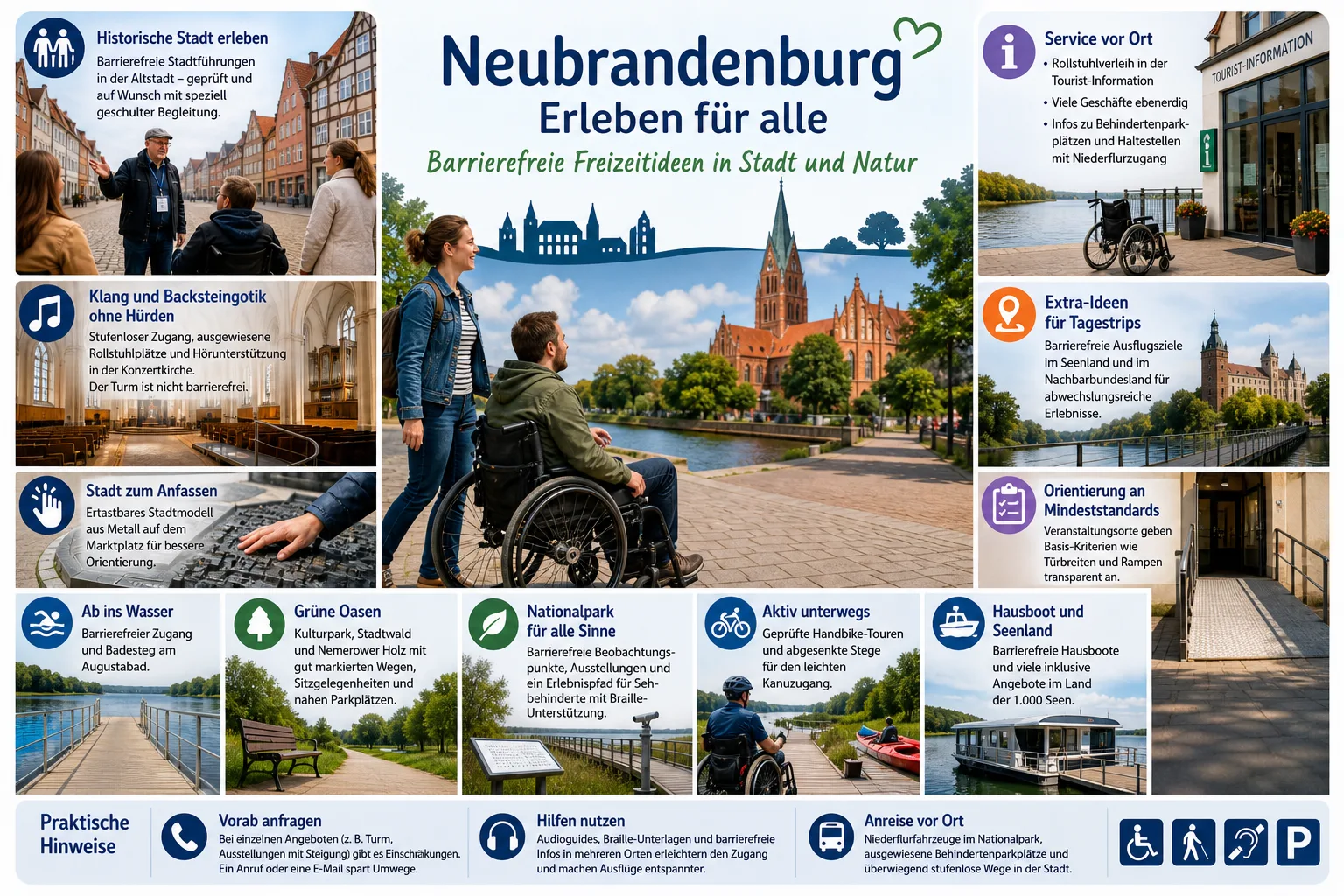
Are you planning an accessible trip to Neubrandenburg and the surrounding area for the coming weeks or for the 2026 season? This overview bundles forward-looking leisure ideas – from planned city walks to concert visits to nature and activity offers – including a checklist of questions you should ask in advance to ensure the day really works out well.
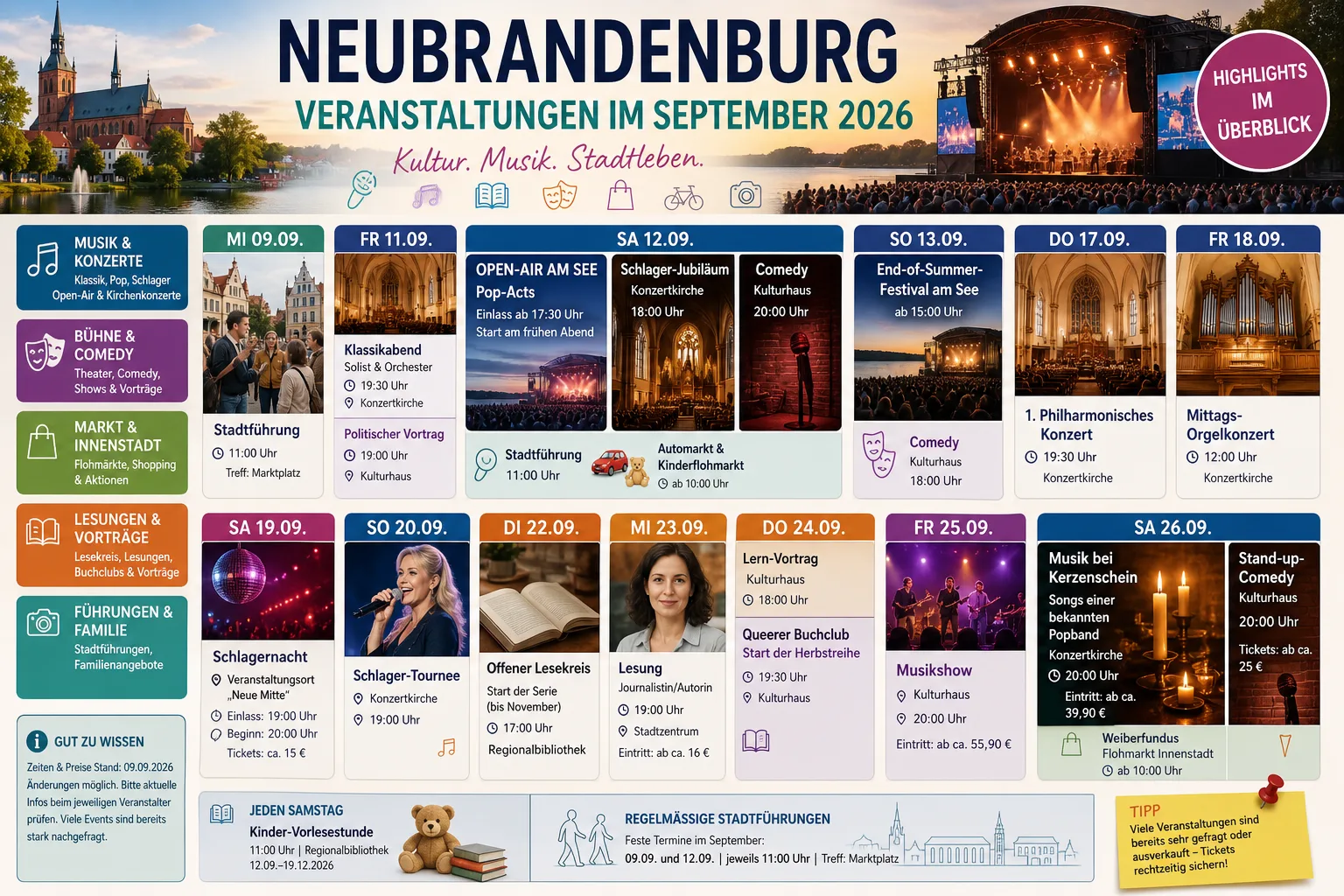
Concert Church: Prepare Your Visit Accessibly
If you want to attend a concert or event at the Neubrandenburg Concert Church in the coming season, it is advisable to clarify a few things with the organizer or venue in advance. This way, you can secure seating, access, and individual support in good time.
Questions you should ask before buying tickets
- Step-free access: Which entrance provides accessible access, and is there an alternative if entry situations change?
- Wheelchair spaces: How many spaces are available, how are they booked, and can companions sit directly next to them?
- Hearing support: Is there a hearing system (e.g., induction), and in which areas of the hall does it work reliably?
- Sanitary & routes: Where is the accessible toilet located, and are routes to it freely accessible during the event?
- Program details: Are there entry times, break lengths, or standing phases that you should plan for if you have limited stamina?
If parts of a building (e.g., tower or gallery areas) are not accessible to you, you can specifically ask about alternatives for future dates, such as sightlines in the main hall, a suitable seat with good acoustics, or an accessible supporting program.
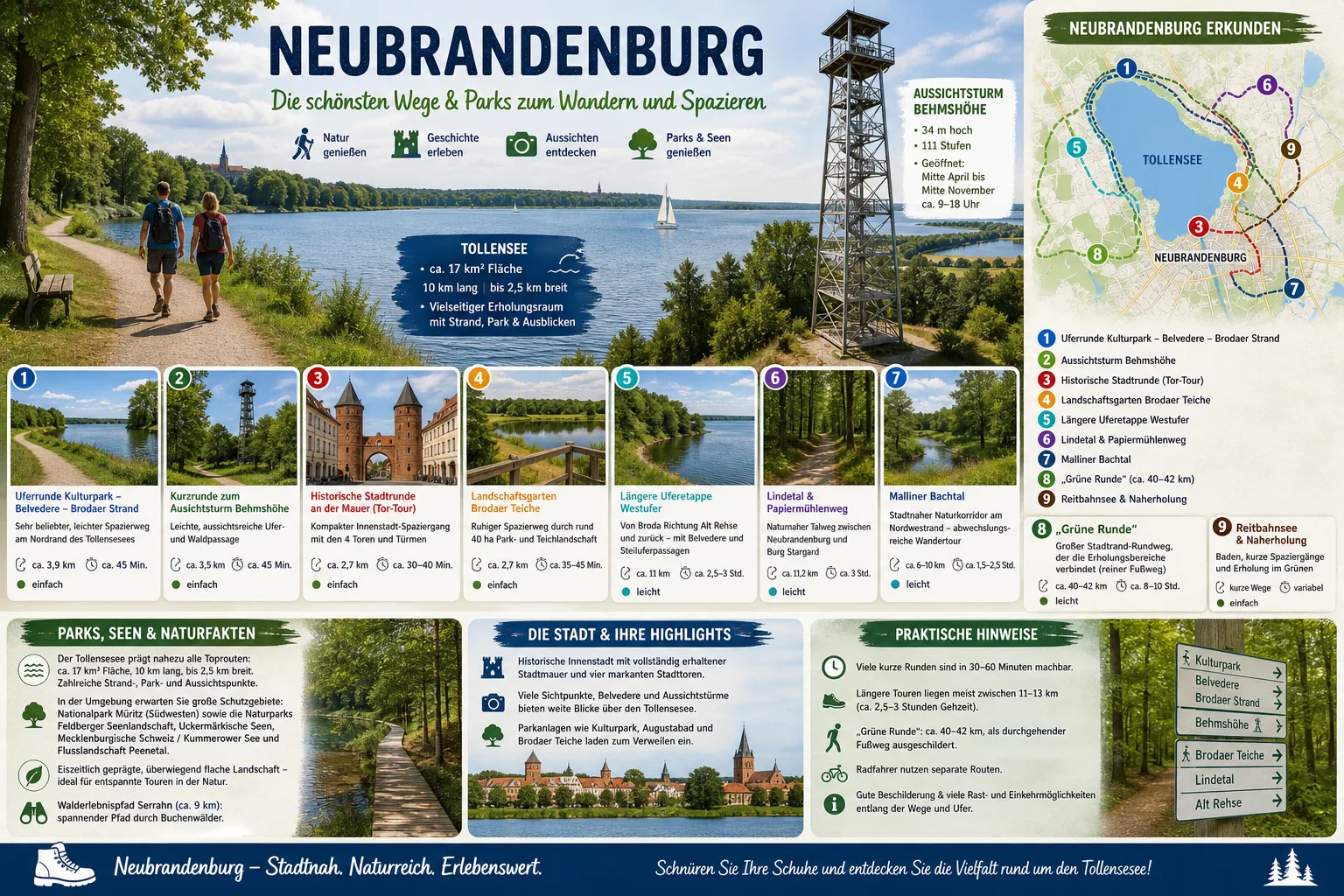
Green, Lake & Break: Accessible Routes for Your Next Outing
For your next free afternoon or weekend, Neubrandenburg can be well planned as a combination of city, water, and green spaces – with short distances, planned breaks, and a route that can be shortened at any time if needed.
Suggestion for an accessible day schedule (flexibly adaptable)
- Arrive & orient: Start with a short walk in the city center and clarify early in the day where your most important points of contact are (e.g., toilet, quiet seating, accessible cafés).
- Green break: Then plan a park or waterfront section to avoid peak loads (heat, crowds, long standing times).
- Lake time: If you plan a swimming day or stay by the shore, it is worth checking in advance what the current access is like (e.g., jetties, ramps, ground surface) and whether there are seasonal restrictions.
For the coming summer season, it is also advisable to pay attention to time of day (shade, heat, peak times), path surfaces, and retreat areas. This makes the outing not only possible, but truly enjoyable.
Müritz Region & National Park: Nature Experiences for Your Next Trip
If you are planning a nature trip to the Müritz region or Müritz National Park in the coming months, you should specifically select accessible offers such as observation points, exhibitions, or themed trails according to current access conditions. In natural areas, paths, surfaces, and detours can change seasonally.
How to check nature offers before your departure
- Path profile: Ask about inclines, cross slopes, path width, and the surface (firm, sandy, rooty, damp).
- Distances: Ask for the distance from the parking lot or stop to the destination (not just the total route).
- Accessible infrastructure: Clarify whether accessible toilets, suitable seating, and weather-protected break points are available.
- Information & mediation: Inquire about offers for hearing or visual impairments (e.g., guided tours, media formats, tactile or high-contrast information) that can be provided for your visit date.
- Arrival: Check for the next connection whether vehicles and stops are accessible, and whether registration (e.g., for mobility assistance) is necessary.
For reliable planning, it is advisable to check the official information pages of the national park and the responsible tourism offices shortly before the trip and to follow up by phone for special requirements. This saves you from taking routes on site that may turn out to be unsuitable.
Active Mobility: Handbike, Water Activities, and Day Trips
For the coming season, you can also actively plan leisure time in and around Neubrandenburg – provided you clarify route and safety issues early. Especially for handbike or water activities, the combination of surface, access, and companionship determines whether an offer is suitable for you.
Advance check for handbike and cycling tours
- Inclines: Ask for the steepest climbs (short and steep can be more strenuous than steady).
- Path width & barriers: Ask about bollards, chicanes, narrow passages, gravel sections, or bridges with edges.
- Breaks & return routes: Plan a drop-out point (e.g., stop, parking lot, café) in case of weather changes or exhaustion.
Advance check for canoe & water offers
- Entry: Clarify how entry works in practice (jetty, ramp, bank) and whether assistance is provided.
- Safety: Ask about flotation aids, transfer options, and an introduction tailored to your needs.
- Weather & wind: Agree on a clear rule for your date as to when the activity will be canceled due to wind or thunderstorms.
If you are planning day trips in the region, choose providers who state access data transparently and respond quickly to inquiries. This is a practical indicator of trust – and reduces the risk that an outing ends up feeling only "theoretically accessible."
Practical Planning: Checklist, Questions & Helpful Standards
To keep your next trip to Neubrandenburg (or the surrounding area) relaxed, a short standard checklist helps. It is deliberately worded so that you can use it directly by email or phone.
Short checklist for inquiries (Copy & Paste)
- Is the access step-free or are there steps (how many, how high)?
- How wide are doors/narrow points along the way (relevant for power wheelchairs)?
- Is there an accessible toilet nearby?
- What kind of path surface can be expected (paving, asphalt, gravel, forest path)?
- Are there fixed seats/quiet areas at events?
- Is there support for hearing/seeing (e.g., induction, accessible media, guided tours)?
- Which arrival is most reliable for the date (public transport/car), and are there nearby accessible parking options?
Why standards help (without replacing individual cases)
Technical and legal frameworks can be useful for orientation: In Germany, DIN 18040 (accessible construction) and legal foundations such as the Disability Equality Act provide guidelines. For your specific trip, however, what matters is the actual situation on site (e.g., temporary construction sites, detours, weather, event setup). That’s why a short advance inquiry is almost always the most effective measure.
Note (not legal advice): This article is intended for travel and leisure planning and does not replace individual advice on structural requirements or legal issues.
Sources
- Disability Equality Act (BGG) — Legal basis for equality and accessibility in Germany (retrieved 2026-06-24)
- DIN: Information on standards for accessible construction (including DIN 18040) — Overview and classification (retrieved 2026-06-24)
- Federal Government: Information on accessibility — Principles and measures in the context of accessibility (retrieved 2026-06-24)
- Müritz National Park (official website) — Current visitor information and planning basics (retrieved 2026-06-24)
- City of Neubrandenburg (official website) — Contact points and current information about the city (retrieved 2026-06-24)